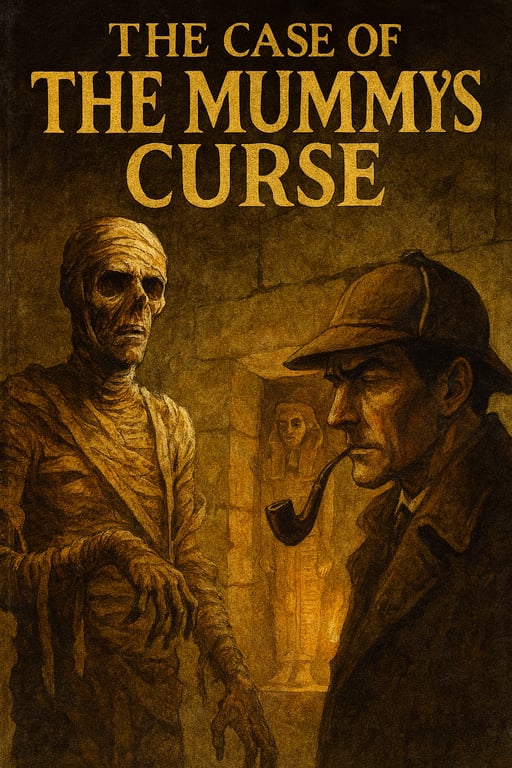
Sherlock Holmes & The case of the mummy's curse
The Case of the Mummy’s Curse London, 1891. The city is gripped by fear as reports of a supernatural killing spree dominate the headlines. An archaeological expedition led by famed Egyptologist Andrew Weatherby returns from the Valley of the Kings with a rare treasure: the mummy of a long-lost Pharaoh. Days after its unveiling at the British Museum, death strikes. Weatherby is found dead in his sealed study, surrounded by strange markings and the scent of ancient incense. Akram Fahmi, an Egyptian scholar, is murdered in the streets, his face frozen in terror. Ebenizir Turnbull, a financier of the dig, is also found dead under mysterious circumstances. The press, led by sensationalist Phillip Travis, fuels hysteria with tales of a vengeful spirit. The public panics, and the police are baffled—no suspect, no motive, no logical explanation. Dr. Watson is disturbed by the irrational frenzy, while Sherlock Holmes remains unmoved. Dismissing superstition, Holmes begins his investigation. He interviews the surviving members of the expedition, examines the financial entanglements behind the dig, and studies the crime scenes with his usual precision. Clues emerge: a chemical scent mistaken for incense, and markings that may not be what they seem. As Holmes delves deeper, the line between myth and reality begins to blur. Is the curse truly supernatural, or is someone using fear as a weapon? The answer lies buried beneath layers of deception, and only Holmes’s relentless logic can uncover the truth. Inspired by the real-life fascination with Egyptology and the myth of the mummy’s curse—popularized after the 1922 discovery of King Tutankhamun’s tomb—this case blends historical intrigue with classic detective storytelling. A tale of mystery, fear, and deduction, The Case of the Mummy’s Curse invites readers to question what they believe—and what they fear.