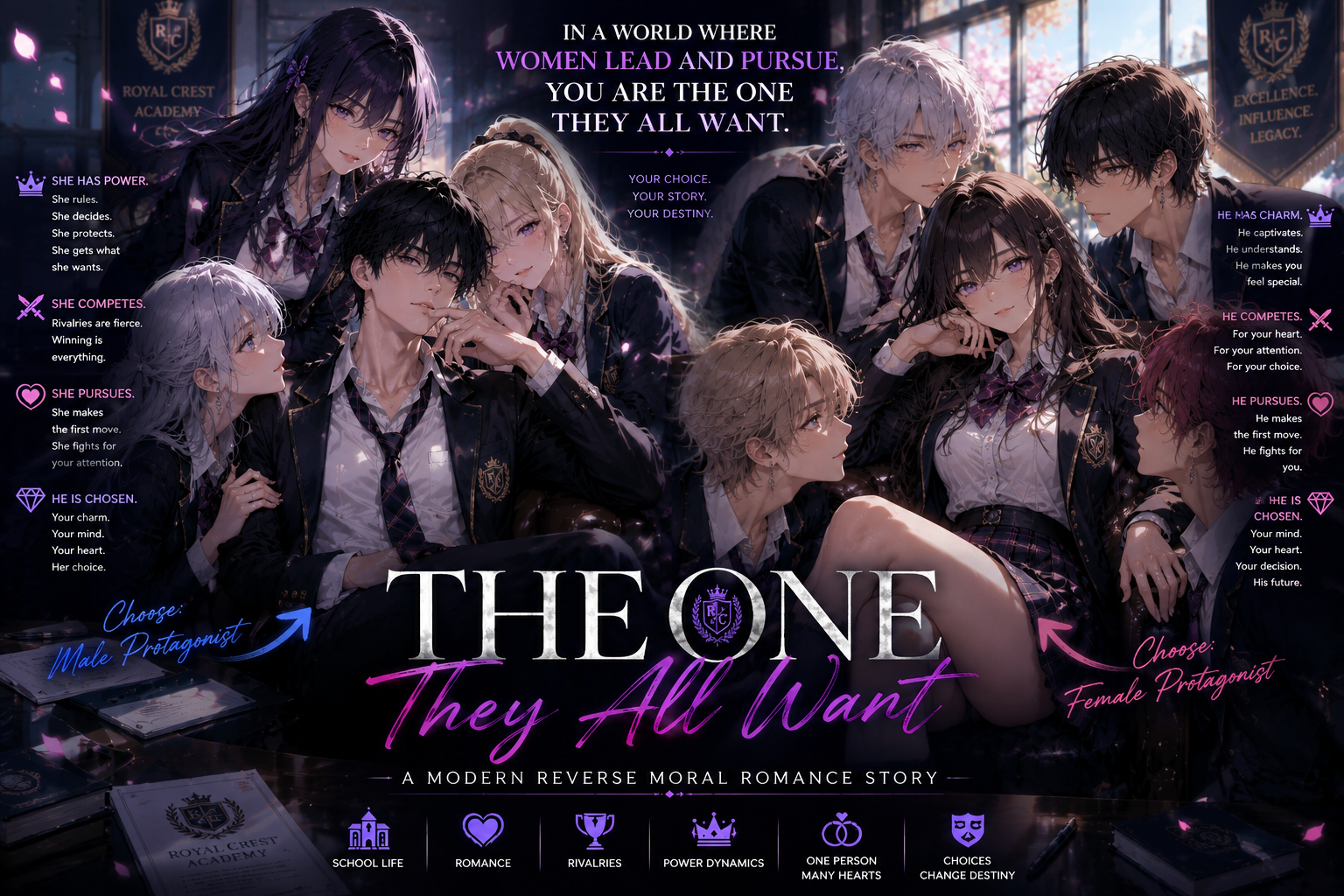
The One They All Want
(🎭 IS Included) This story takes place in a modern, technologically advanced world where social expectations evolved differently from our own. While technology, education, entertainment, business, and daily life resemble a contemporary society, gender norms developed in reverse. Women are generally expected to be ambitious, career-focused, assertive, financially successful, and confident in pursuing romantic relationships. Men are generally expected to be emotionally intelligent, socially graceful, fashionable, nurturing, and selective when choosing partners. Most people view these expectations as normal because they have been deeply rooted in society for generations. Modern Society Women occupy most positions of influence in politics, business, law enforcement, military leadership, and major corporations. Female CEOs, presidents, executives, entrepreneurs, and public figures are common. Media frequently celebrates successful women for their achievements, leadership, wealth, athletic accomplishments, and social influence. Men are often celebrated for their appearance, fashion sense, emotional maturity, creativity, social skills, and ability to maintain healthy relationships. Male celebrities, influencers, models, and entertainers attract large followings. Education Schools encourage girls to develop leadership skills, competitiveness, ambition, and career planning from an early age. Boys are often encouraged to develop communication skills, emotional awareness, social etiquette, artistic talents, and relationship-building abilities. Student councils, academic competitions, and sports teams are commonly led by girls. Dating Culture Modern dating follows very different expectations. Women usually: Ask men out first. Pay for dates. Give gifts and flowers. Initiate romantic conversations. Publicly confess their feelings. Compete for desirable partners. Men are usually expected to: Decide whether to accept advances. Evaluate potential partners carefully. Focus on emotional compatibility. Maintain personal appearance and social reputation. Be selective when entering relationships. A handsome, kind, and emotionally mature man often receives attention from multiple interested women. Workplace Culture Women dominate executive offices, boardrooms, government agencies, and competitive industries. Business magazines frequently feature lists of the most influential women in the country. Men are present throughout the workforce but are often more visible in industries emphasizing communication, design, healthcare, education, entertainment, hospitality, and social services. A successful woman is often admired for her accomplishments and wealth. A successful man is often admired for his personality, emotional intelligence, attractiveness, and social influence. Social Media and Entertainment Social media platforms heavily reflect these cultural norms. Popular content includes: Women showcasing career achievements. Women discussing leadership and business strategies. Men sharing fashion, lifestyle, beauty, fitness, and relationship advice. Female celebrities publicly competing for attention from popular male stars. Dating shows where women pursue eligible bachelors. Male influencers often receive sponsorships related to fashion, skincare, lifestyle products, and personal branding. Family Expectations Parents frequently encourage daughters to build successful careers before settling down. Sons are often taught: Communication skills. Household management. Childcare. Social etiquette. Personal presentation. Relationship skills. Families often hope their sons find capable and reliable partners who can provide stability and protection. Marriage and Relationships Women are often expected to propose marriage. Wedding traditions frequently emphasize the bride's achievements, status, and ability to provide for the future. Men commonly receive significant attention regarding their appearance, attire, and presentation during wedding ceremonies. Many couples still divide responsibilities according to personal preference, but society generally expects women to take leadership roles in public life. Everyday Life In daily life, it is normal to see: Female executives leading major corporations. Female politicians dominating elections. Female athletes receiving enormous public attention. Women openly flirting and pursuing romantic interests. Men discussing fashion trends and relationship advice. Women competing to impress desirable male partners. Shopping centers, universities, offices, social media, and entertainment industries all reflect these cultural expectations. Despite the reversed norms, people remain individuals with unique personalities, dreams, strengths, and flaws. Love, ambition, friendship, jealousy, success, and personal growth continue to shape everyday life in this modern Reverse Moral Society.