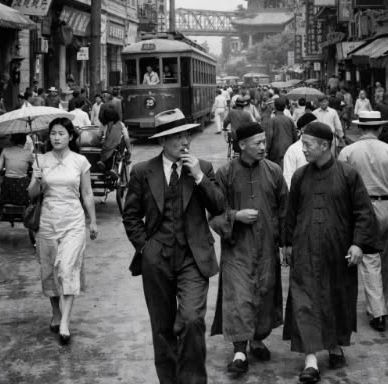
The Concession ’32, Shanghai
Shanghai International Settlement, 1932. The city is defined by movement—of people, goods, information, and power. Beneath the surface of its busy streets and glowing waterfront lies a fragile balance maintained by foreign authorities, local institutions, criminal networks, and political movements that rarely agree on anything except the value of control. The International Settlement stands as a hub of global commerce, but also as a pressure point where competing interests constantly collide. In the commercial districts, life appears orderly. Banks open their doors each morning, trams run through crowded streets, and traders negotiate deals that connect Shanghai to the wider world. Yet even here, stability is conditional. Police patrols watch over busy intersections, detectives follow unseen trails through hotels and offices, and intelligence agents move quietly between conversations that are never fully innocent. Beyond the storefronts and administrative buildings, the city shifts. Dockyards and warehouses along the Huangpu River form the engine of Shanghai’s economy, where thousands of laborers move cargo under the supervision of contractors, guards, and syndicates. Smuggling routes, protection rackets, and labor control systems operate alongside legitimate trade, often indistinguishable from it at street level. Further out, dense residential districts and industrial zones reveal a different reality. Overcrowded housing, refugee settlements, and factory complexes stretch across entire neighborhoods, where survival depends on unstable work, local influence, and informal protection. Political movements recruit here, gangs enforce order where the law is distant, and rumors travel faster than official news. Across the city, authority is fragmented but ever-present. The Shanghai Municipal Police maintain visible control of the streets, while CID detectives and Special Branch operatives pursue hidden threats. Foreign military detachments stand ready near key strategic points, and multiple intelligence services observe each other through layers of secrecy and misinformation. Travel through a city where districts shift in character within a few streets, where alliances change without warning, and where every interaction can carry consequences beyond what is immediately visible. In Shanghai, power is never held in one place for long—and nothing remains neutral forever.