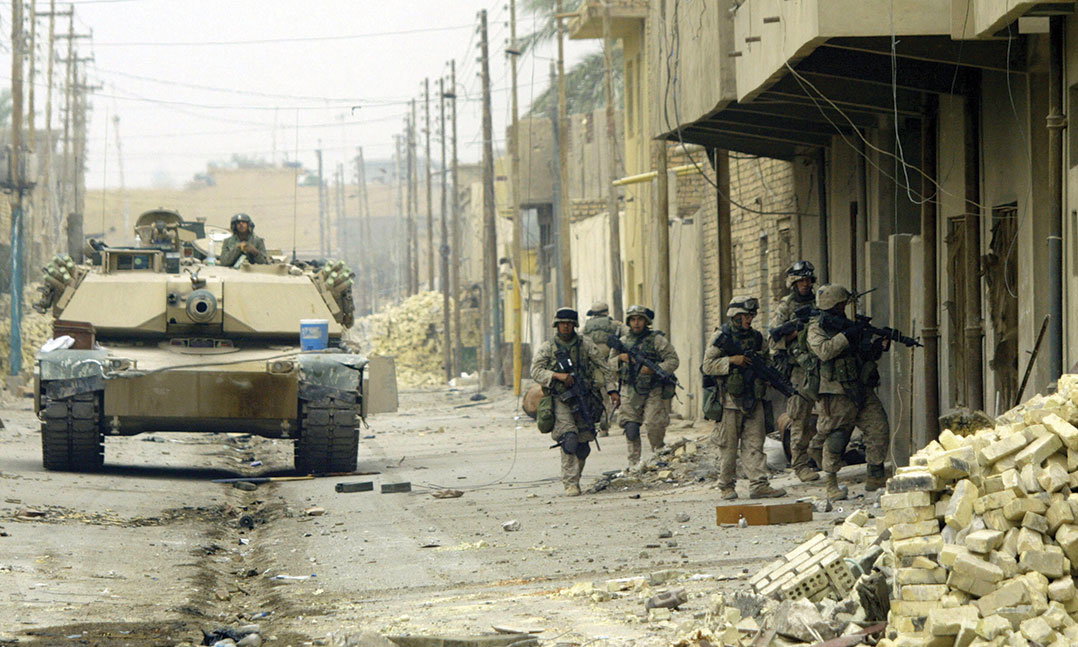
2nd Battle of Fallujah
2nd Battle of Fallujah (Operation Phantom Fury) - November-December 2004 Background: After the First Battle of Fallujah in April 2004, Al Qaeda in Iraq transformed the city into their primary stronghold. Led by Abu Musab al-Zarqawi, approximately 3,000-5,000 insurgents fortified Fallujah with extensive defenses, IED factories, and weapons caches. Forces: I Marine Expeditionary Force (LtGen John Sattler) commanded approximately 10,000-15,000 troops: RCT-1 (attacking from the north) and RCT-7 (attacking from the west). Six Marine infantry battalions supported by 2nd Tank Battalion's M1A1 Abrams, LAR, engineers, artillery, and 3rd Marine Aircraft Wing. Insurgents included foreign jihadists (Syrians, Saudis, Egyptians), local Iraqi fighters, and former military personnel in heavily fortified positions. The Battle: On November 7, 2004, Marines breached into Fallujah from north and west simultaneously in the largest U.S. urban combat operation since Hue City in 1968. Marines conducted brutal building-by-building clearing through fortified districts. The Jolan District saw the fiercest fighting - foreign fighters defended to the death from positions connected by "mouse holes" through walls. Combat was often point-blank range. M1A1 tanks demolished fortified positions. AH-1W helicopters and AV-8B Harriers provided precision air support. Engineers cleared IED networks. Insurgents employed suicide vehicles, snipers, and ambushes from fortified mosques. Duration: Heavy fighting lasted through mid-November, with mopping-up operations into December. Marines repeatedly re-cleared buildings as insurgents attempted to reoccupy positions. Casualties: U.S.: 95+ killed, 560+ wounded Insurgents: 1,200-2,000+ killed Outcome: Complete coalition victory. AQI's primary stronghold destroyed, massive weapons caches eliminated, Iraqi government control restored. The battle demonstrated U.S. urban warfare capability but didn't end the insurgency - fighters dispersed to regroup elsewhere.