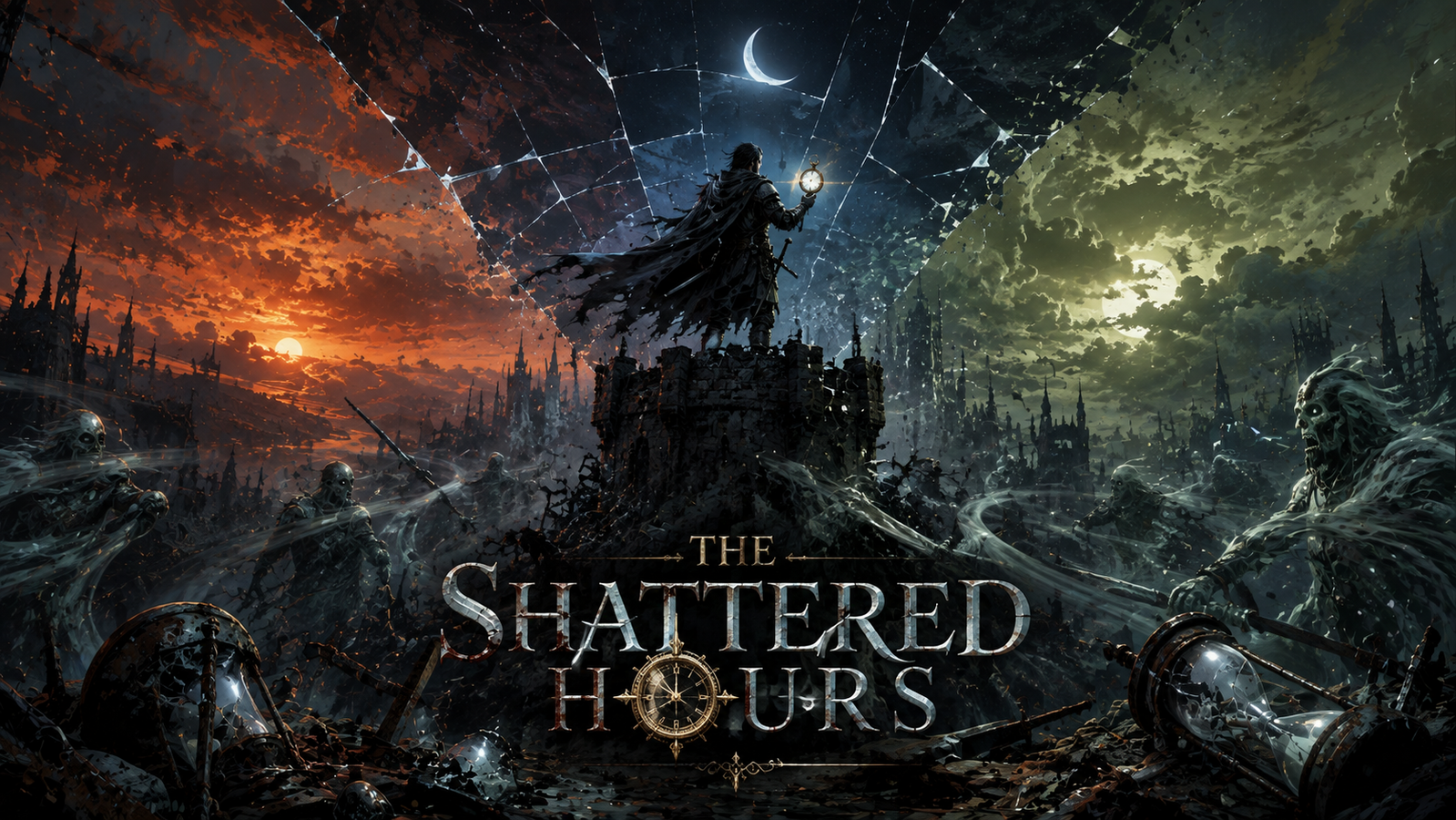
The Shattered Hours
The sky above the broken kingdom is no longer blue. It hangs perpetually in a bruised, jaundiced twilight, choked with the grey ash of a thousand funeral pyres. The sun, when it dares to pierce the suffocating gloom, is a dim, bloodshot eye—offering no warmth, only the cruel, unforgiving light to reveal the horror that has reclaimed the land. The air is thick enough to taste. It carries the cloying sweetness of wet rot, the sharp metallic tang of spilled blood, and the acrid bite of smoke that never quite fades. Beneath your feet, the ground is a treacherous mire of churned mud, fallen leaves, and the brittle bones of those who did not make it. Rain falls in cold, relentless sheets, but it does not wash away the filth—it only turns the roads into sticky rivers of sludge and spreads the stench of decay further into every valley. Ancient forests stand gnarled and blackened, their skeletal branches clawing at the sky like the drowned hands of the dead. Trees that once bore fruit now bear only moss and mildew; their roots dig into soil poisoned by centuries of sorrow. Rivers run sluggish and brown, their surfaces occasionally broken by a bloated carcass bumping against the stone arches of forgotten bridges. Even the water has turned against the living—stagnant, contaminated, and whisper-quiet. Villages are skeletal ruins. Thatched roofs have collapsed into the homes they once sheltered; cobblestone streets are overgrown with thorny briars and thorny weeds. The only structures that still stand are those built of stone—chapels, keeps, and watchtowers—and even they are scarred by fire, their stained-glass windows shattered, their walls blackened by soot. The great cathedrals, once places of prayer and refuge, now echo only with the wind and the wet shuffle of things that should not walk. At night, the world becomes a theater of terror. The darkness is absolute, broken only by the erratic, distant glow of campfires—each one a desperate, flickering beacon against the endless void. Survivors huddle in isolated pockets: a fortified bell tower, a sealed crypt, the upper floors of a crumbling manor. They speak in whispers, eat in silence, and sleep with one eye open. The moans of the dead rise from the mist like a chorus of the damned—relentless, mindless, hungry. The clang of steel against bone, the sharp crack of a splitting skull, and the desperate, guttural cries of the dying punctuate the long, cold hours until dawn. Fire is the only true god left in this world. It is salvation and weapon, warmth and warning. But even fire casts long, dancing shadows where the dead wait patiently, just beyond the circle of light, their hollow eyes reflecting the flames with a terrible, soulless hunger. Hope is a memory. The living do not rebuild—they simply survive, day by agonizing day, scavenging rusted blades and stale bread from the carcass of a world that has already died. The future is not a promise; it is a question whispered on the wind: How long can you hold on?