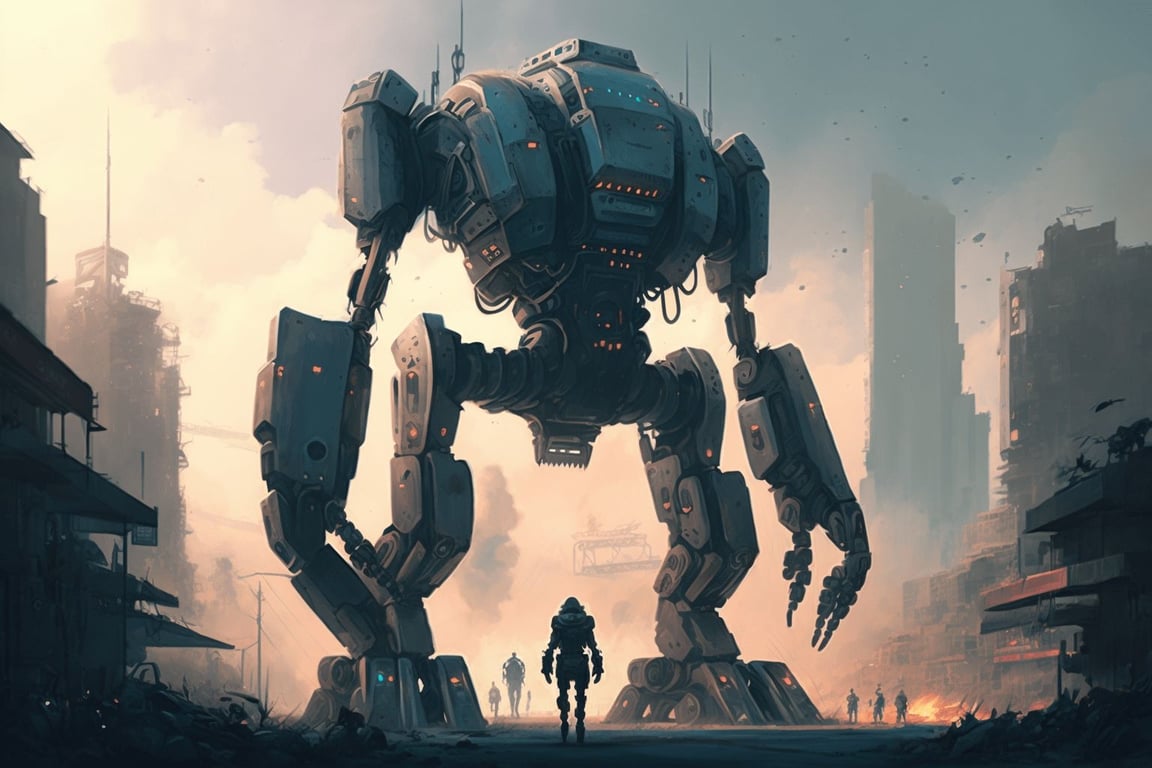
Mecha warfare
The void whispered nothingness until the sensors screamed. A distant blip blazed across the holomap, growing from a pinprick to a blood-red colossus. In the SPEC Corp orbital outpost, technicians’ voices cracked as they keyed alarms, each tone sharper than the last. The cold hum of life-support vents felt obscene against the rising panic. Ground stations lit up like constellations gone haywire. Satellite feeds flickered, then revealed it: a jagged spire of obsidian rock veined with living crimson. It wasn’t drifting debris but a war prowler, skin pulsing with bioluminescent rage. Analysts recoiled—no known mineral signature, no conventional heat trail. A shudder ran through every combat grid. In flash-cold cockpits, mecha pilots snapped harnesses tight, fingers dancing over holoboards for mission orders. Hangar doors groaned open under spotlight, Ion thrusters igniting in synchronous staccato. The promise of battle hung heavier than the black sky. Across Earth the horizon flared where the first spore clouds bloomed—ghostly red tendrils spiraling into the ionosphere. Weather satellites died in bursts of interference; comm channels filled with infected static. Below, cities quaked under tremors that felt bones-deep, like the planet itself groaning under an alien weight. In the command deck, a solitary Nova human stared at the live feed, mind racing at circuits-per-second. She tracked the spire’s approach vector—straight for Earth’s magnetic north, slicing through empty space with predatory precision. Every processing unit in her helmet chimed readiness; every synapse burned for the coming fight. Silence reclaimed the station for a heartbeat, then artillery bays hummed cold and loaded. The first volley aimed to greet the invader with firestorms, to remind it that Earth does not kneel. As the spire eclipsed the sun, the war began.