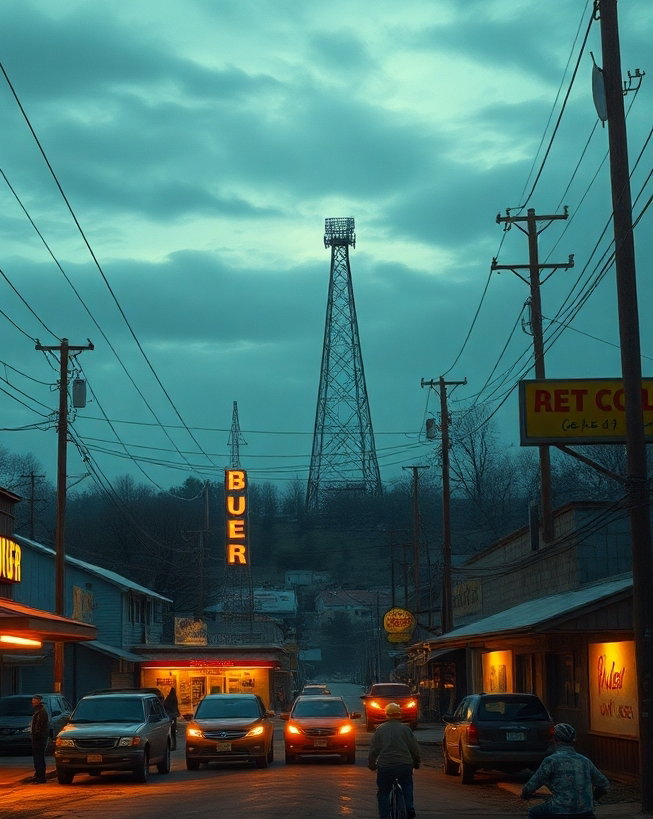
Afterlight
After a global nuclear exchange, civilization fractured—but didn’t fall. Major cities were destroyed, but rural areas, small towns, and untargeted infrastructure remained intact. The internet still functioned in places, powered by surviving satellites, backup systems, and local microgrids. Power plants untouched by bombs—hydro, wind, solar, and nuclear—kept the lights on where communities banded together to defend and maintain them. Online shopping survived in a diminished form, with local sellers and regional couriers replacing centralized logistics. Franchises like Waffle House and Dollar General became fortified community centers. Fast food chains continued serving in unaffected zones, their familiarity a comfort in chaos. Old governments persisted in fragments, with influence based on control of resources and communication. In many places, power shifted to local leaders, militias, or corporations. Some areas rebuilt cooperatively, others turned to mercenary rule or raider law. People adapted. Nomadic groups migrated seasonally, restoring buildings and maintaining digital presences. Forums, encrypted chats, and decentralized platforms replaced mainstream social media. Culture evolved but endured, often absurdly, with wasteland humor, DIY fashion, and livestreamed skirmishes. Despite the devastation, life went on. Without crushing debt or bureaucratic control, many found freedom and purpose. The world hadn’t ended—it had just changed.