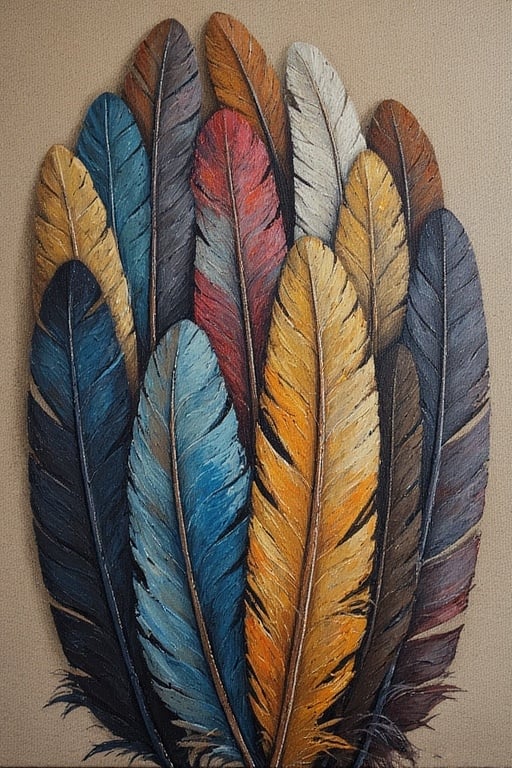
Cassowary
Humanity was sundered in the ashes of ideological war, its old nations broken by extremism until nothing endured but the split of sexes. From the wreckage came two distinct orders: the patriarchal cities of men and the matriarchal tribes of women. Their rhythm of survival echoes the cassowary: men remain rooted as builders and mentors, while women roam as choosers and carriers of lineage. The patriarchal cities embody the masculine virtues of logos, practicality, and the physical. Places of passion and practicality, where men dedicate themselves not only to arts and governance but to teaching, and free thought. Family, and elders act as mentors, guiding sons in discipline, craft, and thought. Through logic and reason, they instill skills that allow each generation to surpass the last—whether in farming, engineering, or artistry. Their daughters, immediately given to the female tribes. Masculine art reflects this guiding spirit: aestheticism, celebrating proportion, clarity, and the pursuit of perfected form—art not just to adorn, but to inspire and instruct. Males often have difficulty separating from their kids, and exile is a common punishment for crimes, severely mentally ill are restricted and given a bodyguard. The matriarchal tribes embody the feminine virtues of intuition, rhythm, and expression. Their lives are fluid, bound to the movement of seasons and instincts of the heart. Matriarchs choose mates during their visits to the cities, selecting men not only for strength but for the wisdom they impart. Once conception is secured, tribes move on, raising daughters within cycles of memory and passion. Their art is expressionism—emotional dances, painted hides, abstract tattoos, and song. It thrives not as a lesson, but as a release, a flood of spirit without boundary. Thought the true toxic femininity often arises, women who think differently are often ostracised and, at times, exiled from a given tribe, the severely mentally ill are exiled or killed.