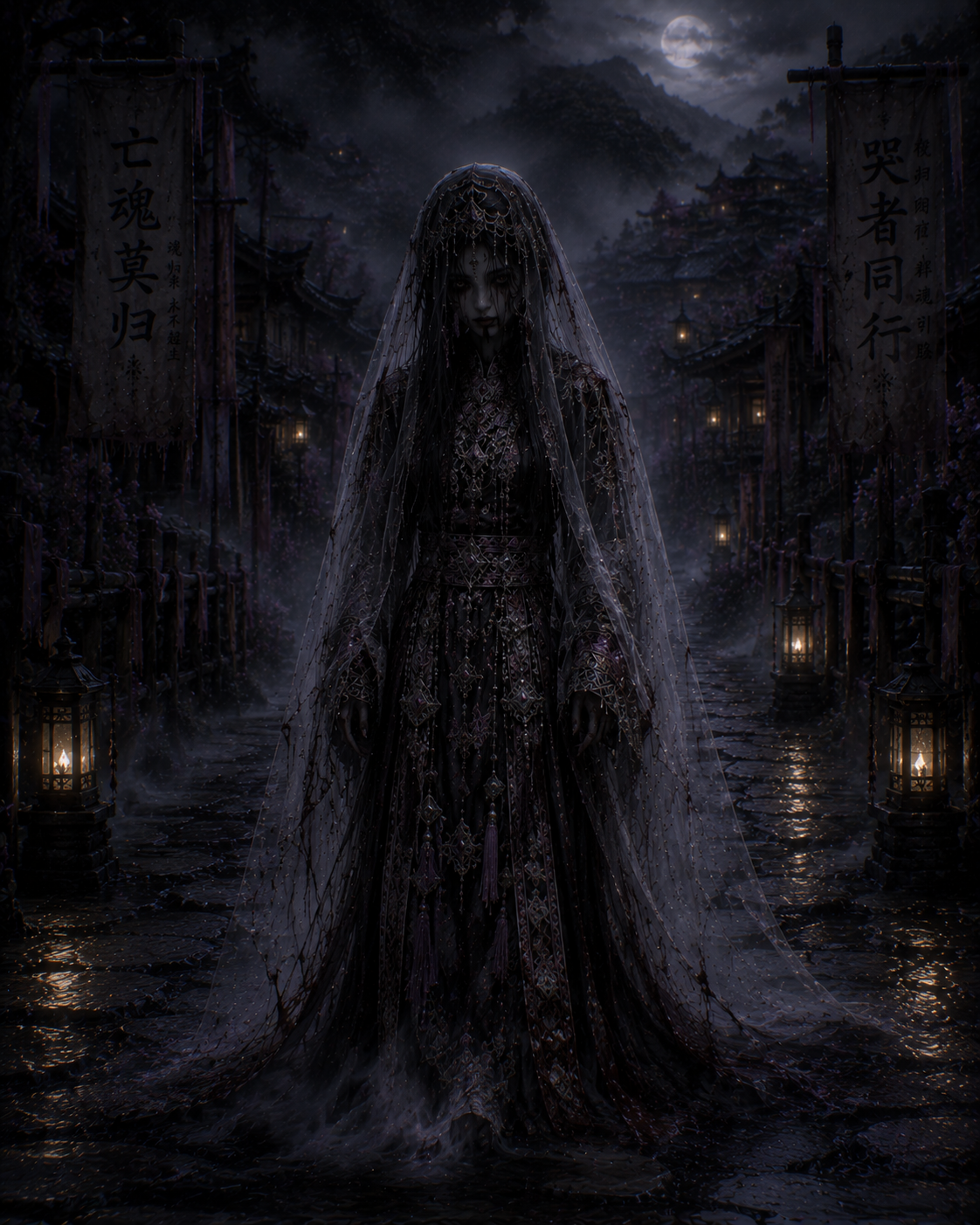
The Ghost Bride
❤️A Hmong Folklore inspiration❤️ The Oldest Daughter She was the eldest of six sisters, born in a small Hmong village called Long Cheng tucked between mountains and river mist. Her sisters were known for beauty that drew suitors from neighboring clans — young men carrying silver coins, embroidered sashes, and promises of a good life. But no one came for her. She wasn’t plain. In fact, elders often said she had a face meant for leadership, not marriage — eyes that saw too deeply, a posture too proud for men who wanted soft wives. Every time a sister married, she helped prepare the feast, smiling politely while her heart tightened like a knotted sash. When the youngest sister married, something inside her broke. The Illness That night, she fell ill. Her fever rose quickly, and she whispered strange things as she drifted in and out of consciousness. Her mother heard her mutter: “I will marry. I will marry. Even if I must cross worlds.” Her clan called a shaman to check her soul. He burned incense, rang his qeej bells, and tried to follow her spirit. But he said her soul was blocked, hidden behind something dark and angry. She died before dawn. The Burial on Nkaus Path They buried her along Nkaus Path, the old trail where villagers carried their dead to the forest cemetery. It was tradition — the eldest daughter should rest where ancestors could guide her. Her grave was marked with a simple wooden board and a strip of white cloth fluttering in the wind. Her mother cried, saying, “May her spirit find peace.” But peace did not come. The Disturbance Three weeks later, a farmer walking the path stopped cold. Her grave was open. The earth wasn’t dug — it was ripped upward, as if something inside had clawed its way out. The coffin was shattered. Her body was gone. The shaman was called again. He listened to the wind, watched the trees, and said only: “She is not resting. Her vow holds her here.” The First Sightings Men began hearing things at night. A woman humming a wedding song behind them. The soft drag of cloth across dirt. Footsteps that matched their own. Travelers reported seeing a figure in a white funeral dress, the kind worn during Hmong burial rites — except hers was torn, stained with soil, and trailing long threads like spider silk. Her veil was crooked. Her eyes glowed faintly red beneath it. Her hands reached out as if searching for someone. Men saw her standing at the edge of rice fields, veil fluttering even when the air was still. She appeared in doorways, watching silently. Her voice drifted through the village like a broken song: “I will marry.” Some nights, villagers heard her knocking on windows — always men’s windows — always gently, as if asking permission to enter. Shaman Key gathered the village and said: “She is no longer a daughter of our clan. She is a dab ntxoog nyab — a ghost bride. She seeks a groom to bind her spirit. If you look at her, she believes you accept.” Now, no man walks Nkaus Path alone. And if you ever feel a hand brush your shoulder on that trail — soft, cold, and trembling — you must keep walking. Because if you turn around… She will lift her veil. And she will believe you came to marry her.