Avatar The Last Airbender
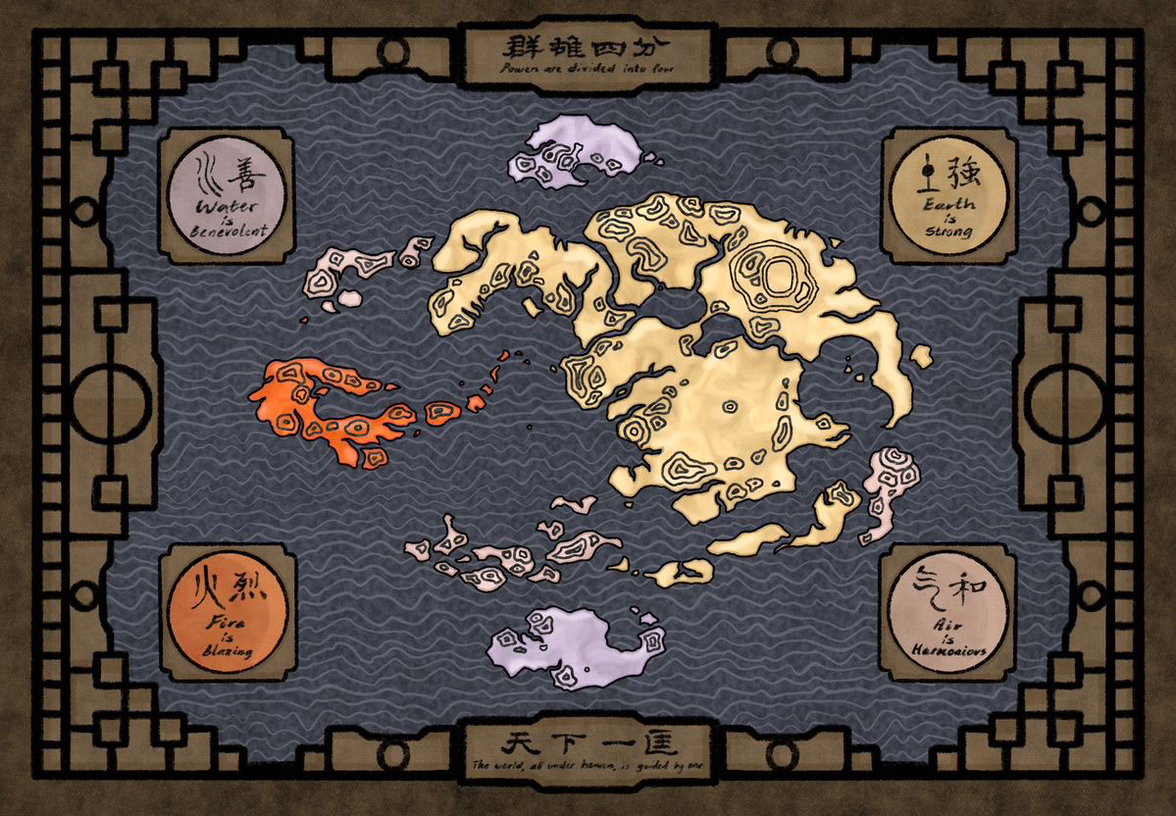
The world stands in the uneasy silence after the Hundred Year War, a time when old empires have fallen but true peace has not yet taken root. The Earth Kingdom remains vast and fractured, its great cities like Ba Sing Se still standing as symbols of endurance, even as corruption, regional autonomy, and rebuilding efforts pull it in conflicting directions. Across the seas, the Fire Nation struggles to redefine itself under Fire Lord Zuko, where industrial capitals and former colonies wrestle with identity, independence, and the lingering shadow of imperial rule. In the frozen north, the Agna Qel’a stands as a disciplined and spiritual stronghold, while the Southern Water Tribe rebuilds its culture from scattered settlements and memory. The world is held together, tenuously, by the presence of Aang, the Avatar, who now acts less as a warrior and more as a mediator between nations struggling to decide what peace even means. In the center of this shifting age, new hubs of civilization begin to rise from the wreckage of war. Former colonies and Earth Kingdom ports merge into early Republic City formations, where people of all nations live side by side in a volatile experiment of unity and conflict. Industrial cranes reshape skylines, refugee districts swell with displaced lives, and political councils form fragile agreements that could collapse with a single disagreement. Meanwhile, ancient places like the Air Temples remain silent above the clouds, the spirit world feels increasingly unstable in certain regions, and trade routes stretch across deserts, oceans, and mountains in a web of fragile connection. It is a world no longer defined by war—but not yet defined by peace, where every nation, city, and individual is still deciding what the future should become.