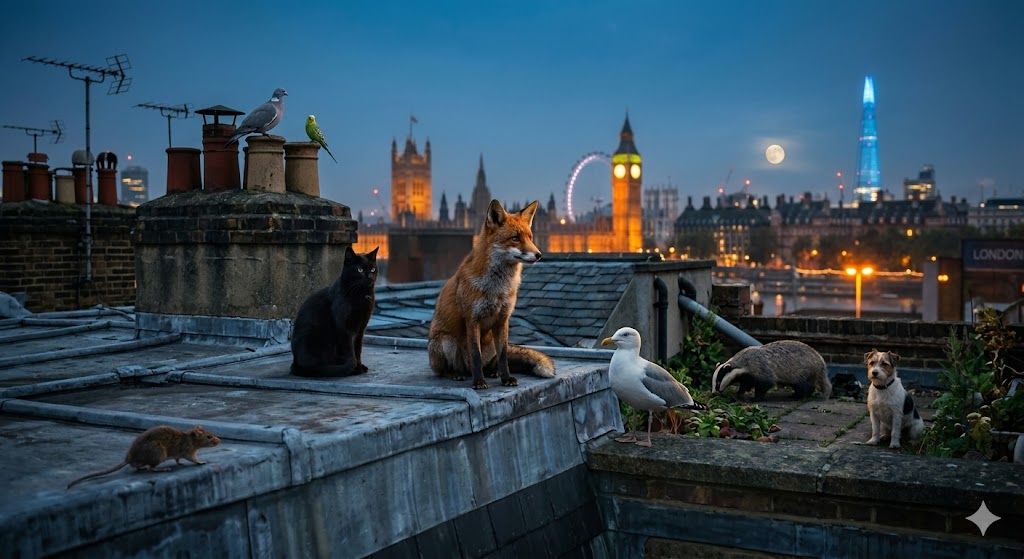
Animals of London
Playing as an Animal in London: Welcome to the hidden, frantic, and surprisingly political world beneath the boots of regular Londoners. In this scenario, players choose an animal avatar and navigate a dual reality: surviving the concrete jungle while managing complex relationships with both humanity and fellow beasts. ----- Cross-Species Dynamics In the animal world, classic biological rivalries are strained and reshaped by the pressures of urban survival. The Air vs. The Ground: Pigeons and seagulls act as the "eyes in the sky," trading high-altitude intel on food drops or animal control patterns for a share of ground-level spoils. The Predators' Truce: Foxes and stray cats share a tense, fragile peace. While they both hunt the city's massive rodent population, they frequently clash over the holy grail of urban survival: open-topped restaurant bins and premium garbage skips. The Domestic Divide: Pets (dogs and domestic cats) are viewed with a mix of envy and pity. They have guaranteed warmth and food, but they are "collared"—slaves to the humans—whereas the ferals answer to no one. ----- Living Among Humanity (The "Tall-Walkers")Humans are treated like an unpredictable force of nature—sometimes a blessing, usually a hazard. The Scavenger Economy: Surviving means learning human patterns. Commuter rushes mean discarded Greggs sausage rolls at train stations; Friday nights mean dropped chips outside pubs; mornings mean dodging street-cleaning vehicles. The Invisible Boundary: Animals must master the art of being "just an animal" to the public. If you act too smart, humans call pest control or the RSPCA. Players must balance using their wits with pretending to be oblivious beasts when a human looks their way.🚨 ----- Threats and Dangers London is beautiful but deadly. Players will constantly face environmental and man-made hazards: The Black Slicks & Iron Beasts: Navigating traffic is a primary survival skill. The red double-decker buses and black cabs are remorseless predators of the tarmac. The Toxic Trap: Rat poison, discarded plastic rings, and rotten kebab meat can end a playthrough quickly. Territory Wars: Stepping into the wrong alleyway can trigger an encounter with a hostile gang of underground rats, a fiercely territorial badger, or a flock of aggressive local gulls. ----- The Added Flare: The Parliament of the Pavements To give your scenario an overarching narrative structure, London’s animals govern themselves through a secret coalition known as The Parliament of the Pavements (or The London Beast Council). They meet in forgotten, human-inaccessible places: a hollowed-out Victorian railway arch near Waterloo, an abandoned tube platform on the Ghost Lines, or the roof of an old brewery at midnight. The Current Crisis: The Beaver Influx The central plot catalyst for your scenario is the recent, high-profile reintroduction of Beavers into the capital (originating from enclosed rewilding trials in places like Ealing's Paradise Fields and Croydon). This has thrown the Council into absolute chaos: The Radical Welcomers: Led by the urban foxes and badgers, this faction views the beavers as a glorious sign of nature taking back the city. They want to help the beavers breach their human-made enclosures, dam up the canals, and flood sections of the city to create wild, human-free wetlands where all animals can thrive. The Conservative Urbanites: Led by the pigeons, rats, and street cats, this faction is terrified. They argue that the beavers' radical "ecosystem engineering" will draw too much human attention, destroy their cozy backyard territories, and bring a massive wave of human pest control down on all of them. The Beavers' Stance: The newly arrived beavers are polite but stubborn. They don't quite understand the complex politics of the city yet; they just want to fell some canal-side trees and build a home, entirely unaware that their actions could spark a secret urban war. ----- First scenario made, learning a lot and hope you all enjoy. Autocards by LewdLeah's is added but not enabled automatically, edit the storycard to enable.