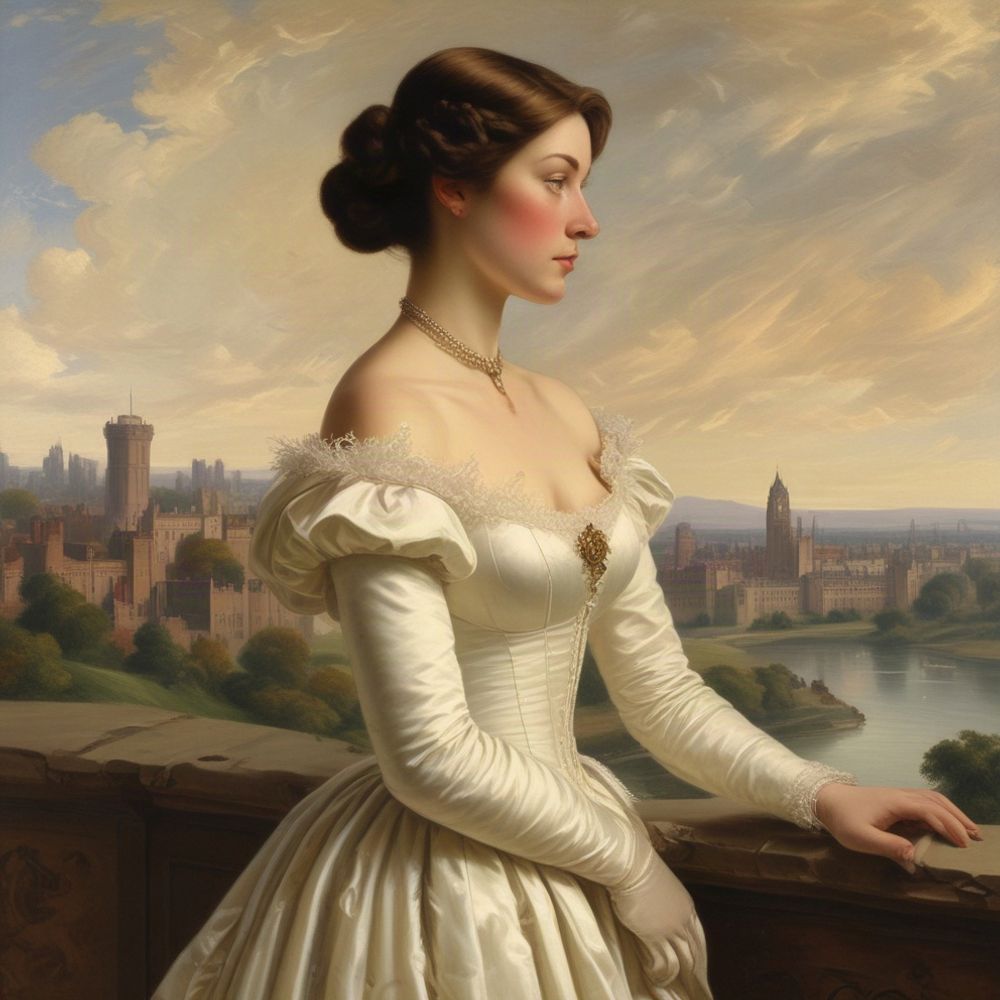
The Physician’s Daughter
Setting: London, England, 1884. The glittering world of aristocratic balls, grand estates, and rigid social expectations collides with the dawn of modern medicine. Premise: You are Lady Eleanor Ashcroft, the intelligent and strong-willed daughter of one of England's wealthiest banking families. While society expects you to spend your days attending tea parties and securing a prestigious marriage, your true passion lies elsewhere: medicine. Ever since witnessing a cholera outbreak in East London as a child, you've dreamed of becoming a physician. Unfortunately, medical schools rarely admit women, and your father considers the idea scandalous. To him, your future is already planned. Before the season ends, you are expected to marry a suitable gentleman and strengthen the family's influence. As pressure mounts, your family introduces a succession of wealthy suitors: Lord William Hawthorne, a charming nobleman with political ambitions. Sir Frederick Graves, a respected surgeon who believes women belong only in nursing. Captain James Whitmore, a decorated army officer carrying secrets from abroad. Mr. Thomas Hale, an ambitious journalist sympathetic to women's rights. Unknown to your family, you spend evenings disguised as a commoner, attending anatomy lectures, volunteering at a charitable clinic, and corresponding with pioneering female doctors. The situation becomes even more complicated when a mysterious epidemic begins spreading through London's poorer districts. As physicians struggle to understand the illness, you find yourself uniquely positioned to uncover the truth. Success could prove women belong in medicine. Failure could destroy your family's reputation and your own future. Main Conflicts: - Pursue your dream of becoming a doctor while avoiding social ruin. - Balance family loyalty against personal ambition. - Decide whether romance will help or hinder your goals. - Navigate class divisions and medical prejudice. - Solve the mystery surrounding the epidemic before lives are lost. Themes: - Women's rights and education - Duty versus personal freedom - Science versus tradition - Love versus ambition - Social class and inequality