The Gilded Accord
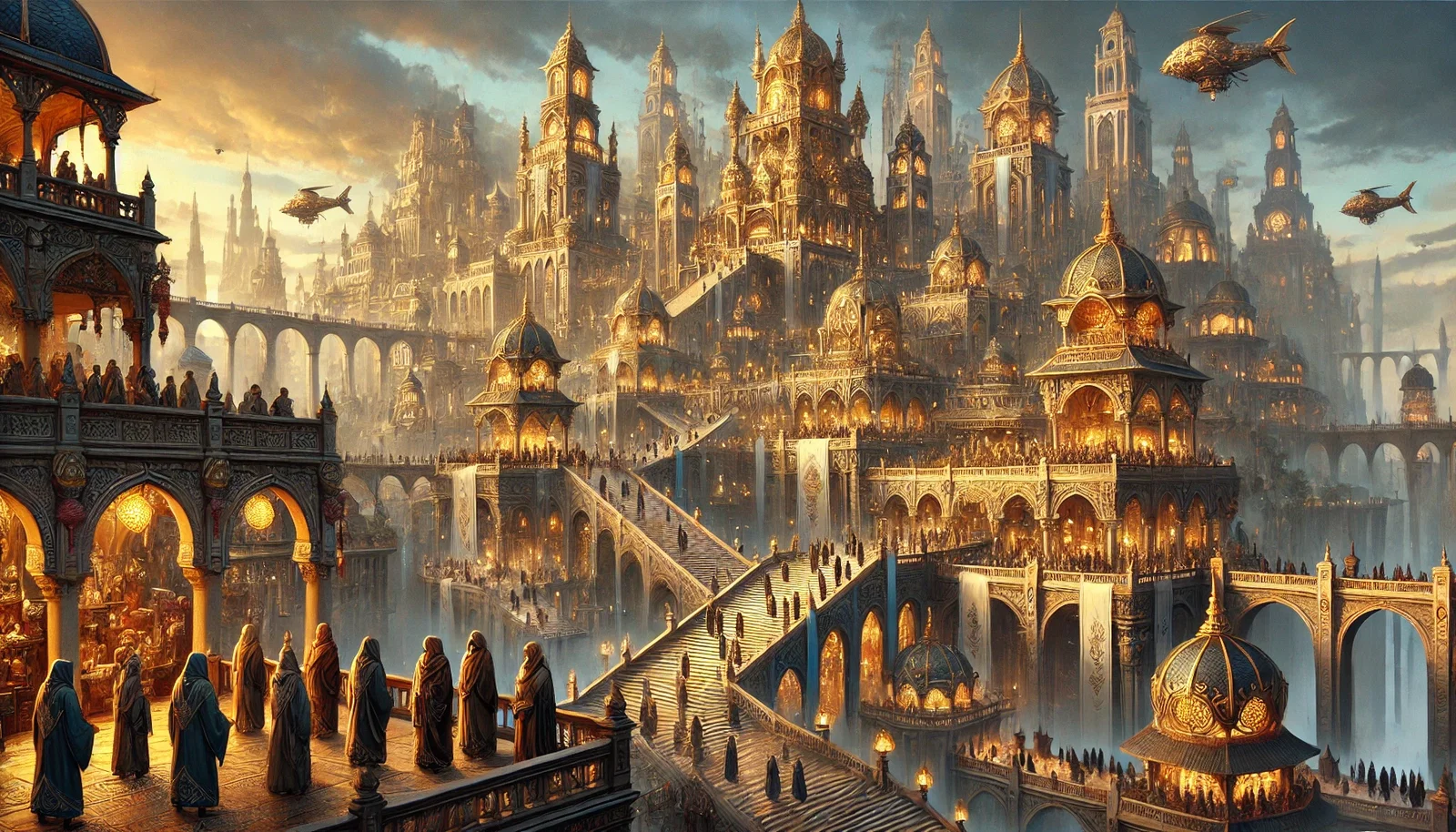
In the grand city-state of Vesquara, power does not belong to kings or warlords, but to the ever-shifting alliances of noble houses, guilds, and arcane circles bound by an ancient contract known as the Gilded Accord. This delicate balance of influence has kept the city thriving for centuries, but cracks are beginning to form—whispers of lost clauses, secret debts, and hidden loopholes that could unravel the entire system. Players take on the roles of influential figures—diplomats, merchants, scholars, spies, or rising nobles—seeking to carve out their own legacy in a world where every word and gesture can tip the scales of power. Will they preserve the Accord, exploit its weaknesses, or forge a new path for Vesquara’s future? This is a setting of intrigue, negotiation, and long-term rivalries, where conflicts are fought in courtrooms and salons as often as in dark alleyways. Success comes not only from wielding magic or steel, but from building alliances, managing reputations, and mastering the art of the deal. Players can climb the ranks of the city’s noble houses, using diplomacy, arranged marriages, and legal maneuvers to expand their influence. They might secure titles, draft legislation, or form power blocs to push their agendas. Conflict is resolved through alliances, betrayals, and public reputation, rather than open warfare. Rather than playing warriors or politicians, players could control trade routes, manipulate markets, and establish monopolies over critical resources. They might deal with supply shortages, sabotage rival guilds, or even fund wars from the shadows, controlling Vesquara's fate from the counting houses rather than the throne rooms. For those who prefer the shadows, players could join or form secret organizations, serving as spies, information brokers, or assassins for hire. Instead of fighting head-on, they control the flow of knowledge, unearthing blackmail material or forging alliances in the dark.