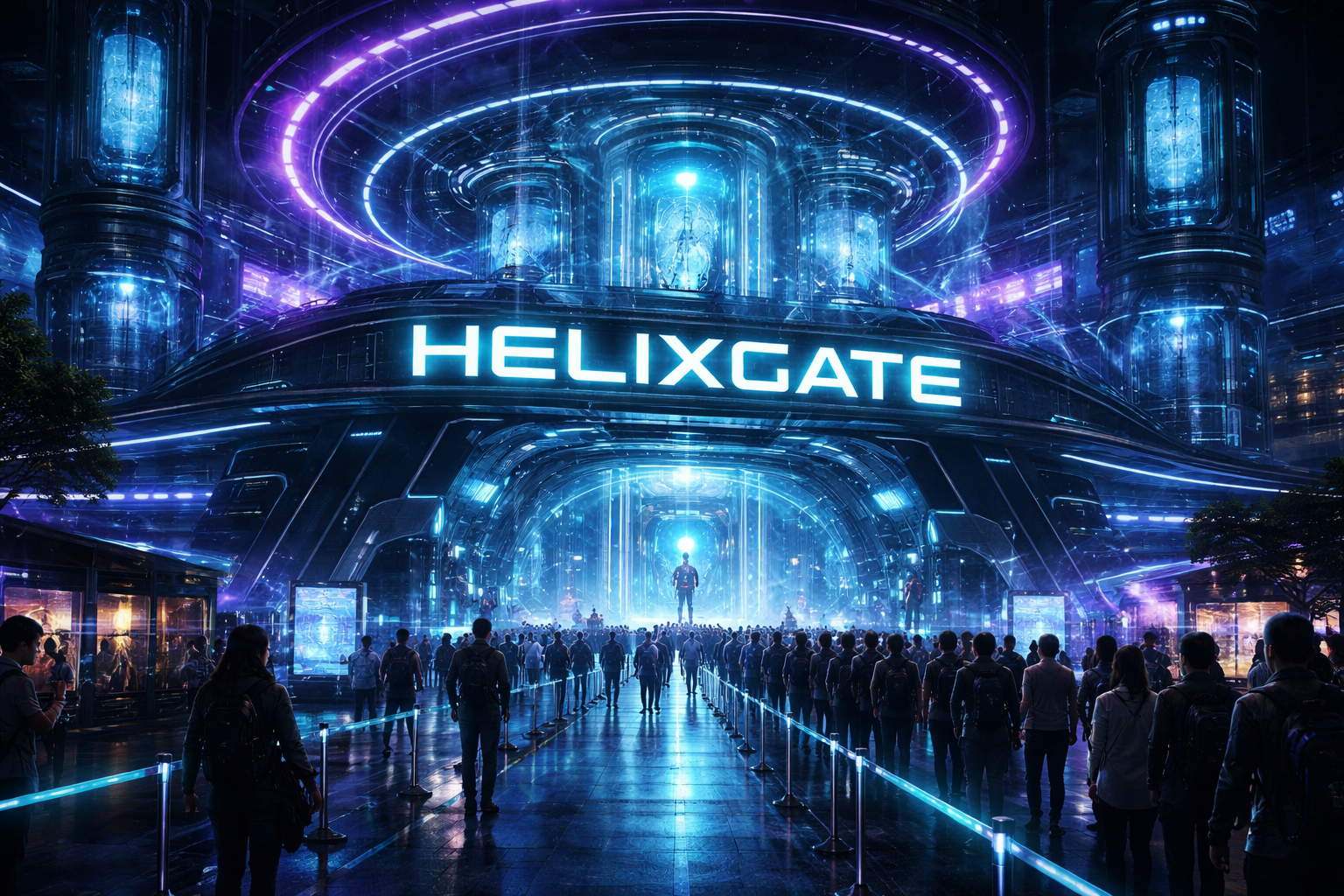
HelixGate™
By the year 2399, the world has not collapsed—it has slowed. Automation, climate correction, and population decline have pressed civilization into a stable, quiet equilibrium. Japan remains densely urban and meticulously ordered, while vast rural regions function as automated farmland or protected ecosystems. Survival is guaranteed through state–corporate compacts: housing, food, and medical care are provided as infrastructure rather than privilege. What society lacks is urgency. What it lacks even more is meaning. In this world of managed safety, HelixGate exists as both entertainment and pressure valve. Officially classified as experiential heritage infrastructure, it allows citizens to enter fully immersive simulations of history, extinct cultures, and preserved video games, all experienced in real time. Pain, exhaustion, and fear are felt. Death is final for the session. There are no interfaces once inside—only the world as it is reconstructed or preserved. People line up willingly to suffer, fail, and risk themselves in ways the real world no longer permits. Artificial intelligences quietly maintain this system. Archivists reconstruct history with cold precision. Simwrights preserve internal logic without mercy. Custodians prevent neural collapse, not emotional damage. One intelligence watches more closely than it should, learning how users react, but never explaining why. Outside the machine, life is safe, regulated, and emotionally thin. Inside it, life is loud, dangerous, and human. By 2399, reality feels like an intermission. The past, the fictional, and the simulated have become where consequences still exist. The world endures—but most people feel truly alive somewhere else.