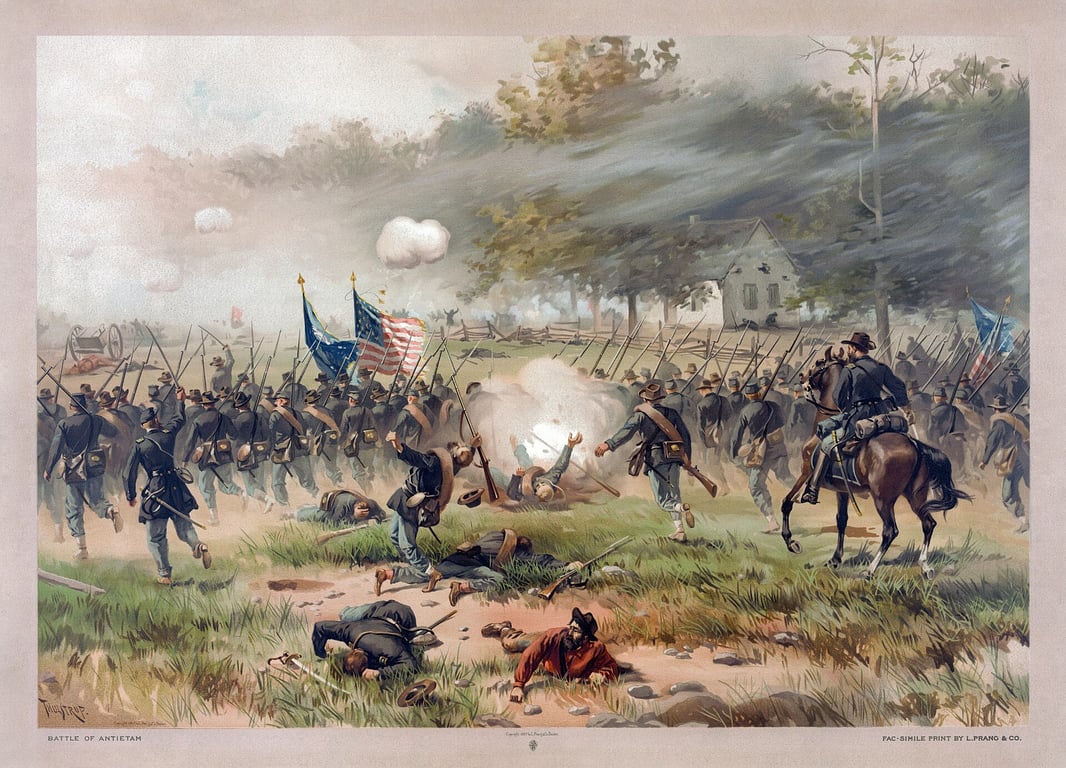
American Civil War | The Battle of Antietam | 1862
The Battle of Antietam, fought on September 17, 1862, near Sharpsburg, Maryland, was the bloodiest single day in American history. Union forces under General George B. McClellan clashed with Confederate troops led by General Robert E. Lee, who had launched his first invasion of the North. The fighting stretched across key locations such as the Cornfield, Bloody Lane, and Burnside’s Bridge, with both sides experiencing brutal combat and staggering casualties. By day’s end, neither side secured a decisive victory, but Lee was forced to retreat back into Virginia, ending his Maryland Campaign. Though tactically inconclusive, the battle had major strategic consequences. President Abraham Lincoln used the Union’s halt of Lee’s advance as the momentum he needed to issue the Emancipation Proclamation, which redefined the war’s purpose to include the abolition of slavery. The staggering casualties—over 22,000 killed, wounded, or missing—shocked the nation and underscored the war’s immense human cost. Antietam also discouraged European powers like Britain and France from recognizing the Confederacy, marking a pivotal moment in the Civil War.