Stories of Nowheraki
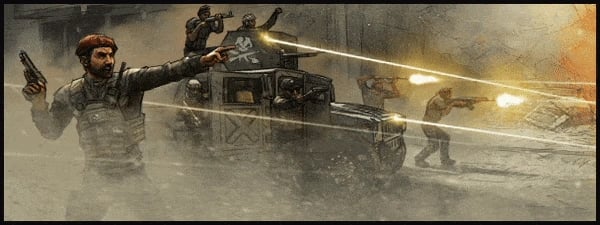
Nowheraki Nowheraki is a landlocked Central Asian country with rugged northern mountains and arid southern plains. The population is around 12–13 million, mostly Shi’a Muslim, with tribal structures still influential in rural areas. Urban centers like Zaranabad, Qadirpur, and Zaranabad serve as administrative, economic, and military hubs. The economy relies on agriculture—grain, livestock, and cotton—alongside small-scale industry and regional trade. Remittances and foreign aid are significant sources of income. The country has a fragmented government influenced by Shi’a Islamist principles. Real power is shared between central authorities, tribal leaders, and militias. The Nowheraki National Army (NNA) is the main military force, using a mix of Soviet-era, U.S.-supplied, and modern small arms, including AKMs, M16A2s, and older RPKs and PKMs. The Nowheraki National Police (NNP) handles law enforcement, while an elite SWAT force operates semi-independently, often using ballistic shields in high-risk operations. The air force operates utility, transport, attack, and multirole aircraft, along with reconnaissance planes and helicopters. Infrastructure is limited outside cities, with rough roads, regional airports, and small river ports. Since 2008, the U.S. invaded to overthrow a dictatorship threatening Saudi Arabia, modernizing elite units but leaving rural areas contested by militias and extremist groups like the Islamic State of Nowheraki. Nowheraki’s society blends Shi’a religious observance with tribal customs, while security challenges include insurgency, organized crime, and semi-independent militias.