👾 Game State: Lightweight state engine
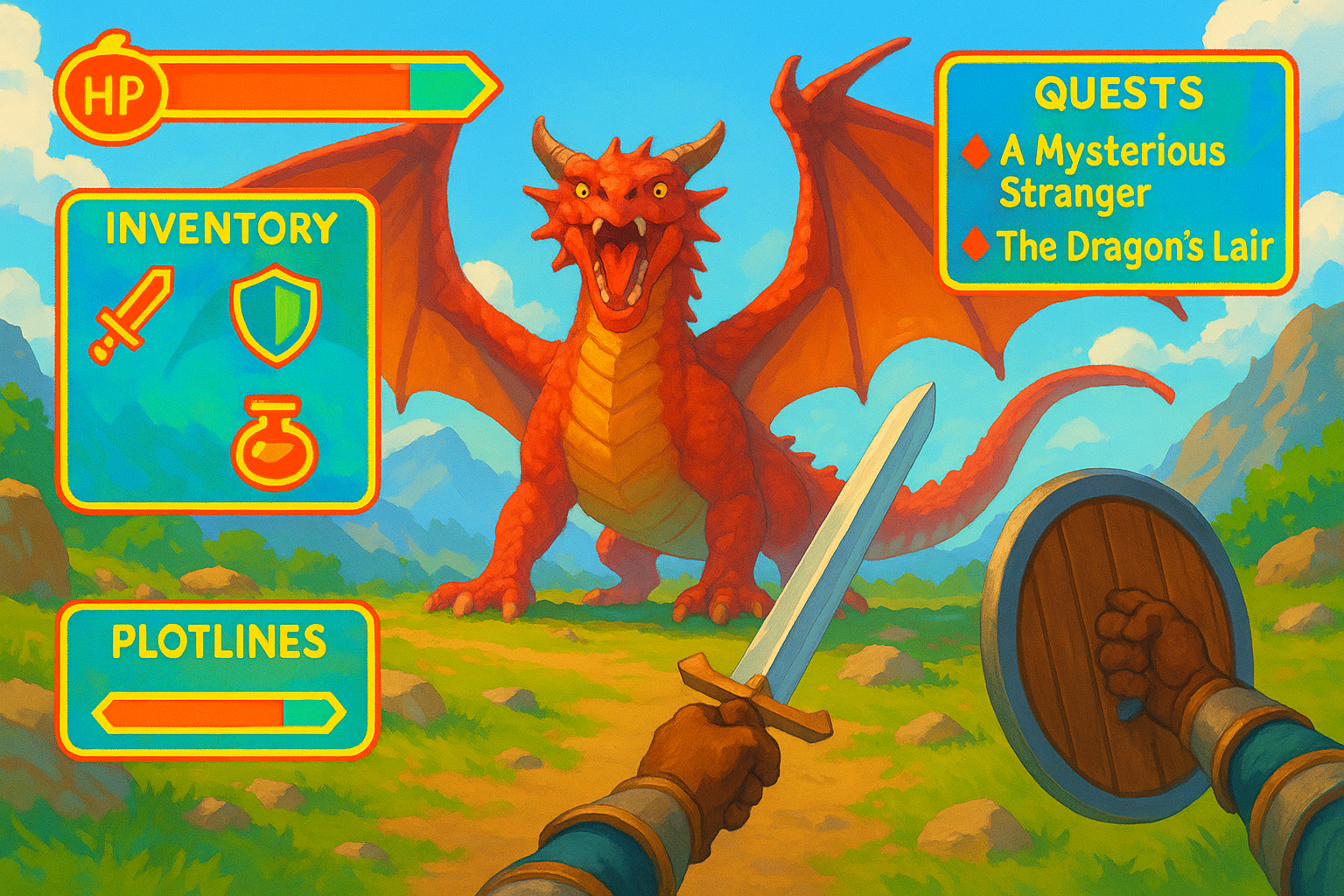
Game State encodes the protagonist’s inventory, conditions, and status inline using compact '∆ key op value;' entries. This lets the AI track ammo, health, relationship scores, leveling, and quest items without hard-coding anything. Behind the scenes, the player card and time data are merged into a new Game State section when sent to the AI. The AI has seen thousands of examples from Unreal/Unity and other engines, so it naturally understands our intent. Requires an AI capable of multitasking: ✅ Compatible: Mistral Small / 3, Harbinger, WizardLM, Nova, Wayfarer Large, Hermes 3 (70B & 405B), DeepSeek V3/3.1, Mistral Large ❓ Uncertain: Dynamic Large 🚫 Not Recommended: Dynamic Small, Muse, Wayfarer Small / 2, Madness Minimal example scenario defaults to medieval fantasy, but you can adapt it to any genre. 🚪 This opens the door for: - Persistent quests and collectibles (track all 8 pieces of the triforce) in a flexible way triforce-pieces: 2/8 Or palace1-complete: true palace2-complete: false - Branching arcs the AI actually remembers - Stats-driven narrative systems (injuries, corruption, clothing worn, affection) - Known spells or feats lists 🧰 Dev Notes The script handles parsing and merging of any key-value pair automatically: Lists: (a,b,c) Bags: {a:1,b:2} HP-like stats: cur/max Strings: true/false, descriptions, plotlines, etc In the player card notes section, you can list if a key-value pair is mandatory or optional. The order it appears in the notes is the order in the card's entry. 🔮 Source code: https://gitlab.com/xilmanaath-ai-dungeon/game-state --- 🌐 LoLa Localized Languages (by LewdLeah) 🃏 Autocards enabled (by LewdLeah) 🕚 Epoch Time System: custom monotonic clock with event-based progression 📌 PSA: Enable Memory Bank in your adventure for scripts to function properly.