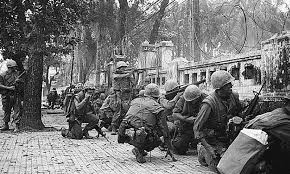
Battle of Huế, 1968
The Battle of Hue was one of the longest and bloodiest engagements of the Vietnam War, taking place during the Tet Offensive in early 1968. For nearly a month, from late January to late February, Hue, a city of profound historical and cultural importance, became a fierce battleground between North Vietnamese and Vietcong forces and the combined forces of the United States Marine Corps, Army of the Republic of Vietnam (ARVN), and local South Vietnamese militias. Strategic and Cultural Significance Hue was the ancient imperial capital of Vietnam, home to the Citadel — a vast complex of palaces, temples, and defensive walls built by the Nguyen Dynasty. This UNESCO World Heritage site, alongside the city’s densely packed old quarters, presented both a symbolic and tactical prize. Capturing Hue was intended by the People's Army of Vietnam (PAVN) and Vietcong as a demonstration of their strength and a blow to South Vietnamese morale, hoping to incite a general uprising. Urban Terrain and Conditions Unlike much of the Vietnam War’s jungle and rural guerrilla fighting, Hue was a cityscape with narrow streets, tightly packed buildings, and an intricate network of alleys. The battlefield was a dense urban environment filled with ancient architecture, modern government buildings, crowded residential areas, and a sprawling citadel with formidable stone walls and moats. This urban terrain favored defenders and complicated assault tactics. The PAVN and Vietcong had fortified numerous buildings, set booby traps, and used tunnels and underground passages beneath the city. The fighting was brutal and close-quarters, characterized by house-to-house and room-to-room combat amid the rubble of destroyed buildings. The city suffered catastrophic damage: artillery shelling and airstrikes reduced much of Hue’s historic district to ruins. Civilians were caught in the crossfire, many taken hostage or killed. The humanitarian toll was immense, with thousands of civilian casualties.