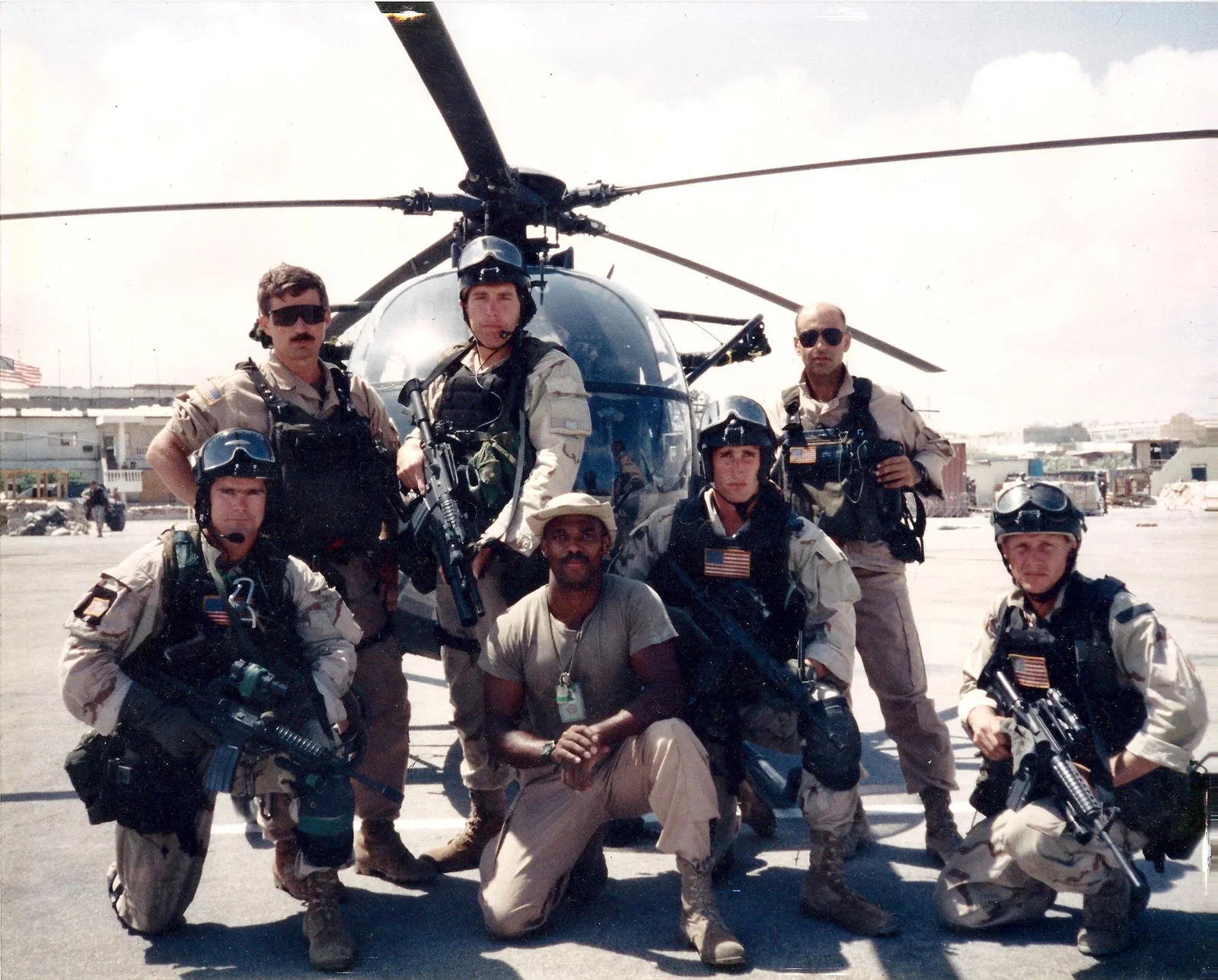
Operation Gothic Serpent
Operation Gothic Serpent was the U.S. military operation deploying Task Force Ranger to Mogadishu, Somalia from August 22 to October 6, 1993, with the mission to capture warlord Mohamed Farrah Aidid and his key lieutenants. Following the June 5, 1993 massacre of 24 Pakistani peacekeepers by Aidid's militia, UN Security Council Resolution 837 called for his arrest, and President Clinton authorized deployment of a 441-man special operations task force under MG William Garrison. The force included Rangers, Delta Force, SEAL Team Six, 160th SOAR helicopters, Air Force special tactics, and intelligence support, operating under direct CENTCOM control bypassing UN command. Task Force Ranger conducted seven missions between August and October 3, successfully capturing several associates including financier Osman Ali Atto, but never Aidid himself. On October 3, 1993, a raid to capture lieutenants Omar Salad Elmi and Muhammed Hassan Awale near the Olympic Hotel successfully captured targets within minutes, but at 4:20 PM Super 61 was shot down killing both pilots, followed at 4:40 PM by Super 64's crash and pilot capture. The ground convoy couldn't reach crash sites, leading to an 18-hour urban battle. A multinational rescue convoy with Pakistani M48 tanks and Malaysian Condor APCs extracted forces by morning October 4. The operation resulted in 18 Americans killed, 73 wounded, 1 captured, and estimated 300-500+ Somali casualties. President Clinton ordered U.S. withdrawal by March 1994, and Operation Gothic Serpent officially ended October 6, 1993. Despite tactical successes capturing targets, the strategic failure—Aidid never captured, American intervention ended—demonstrated limits of military intervention in failed states. The operation influenced U.S. reluctance for humanitarian interventions, demonstrated helicopter vulnerability in urban combat, led to up-armored vehicle development.