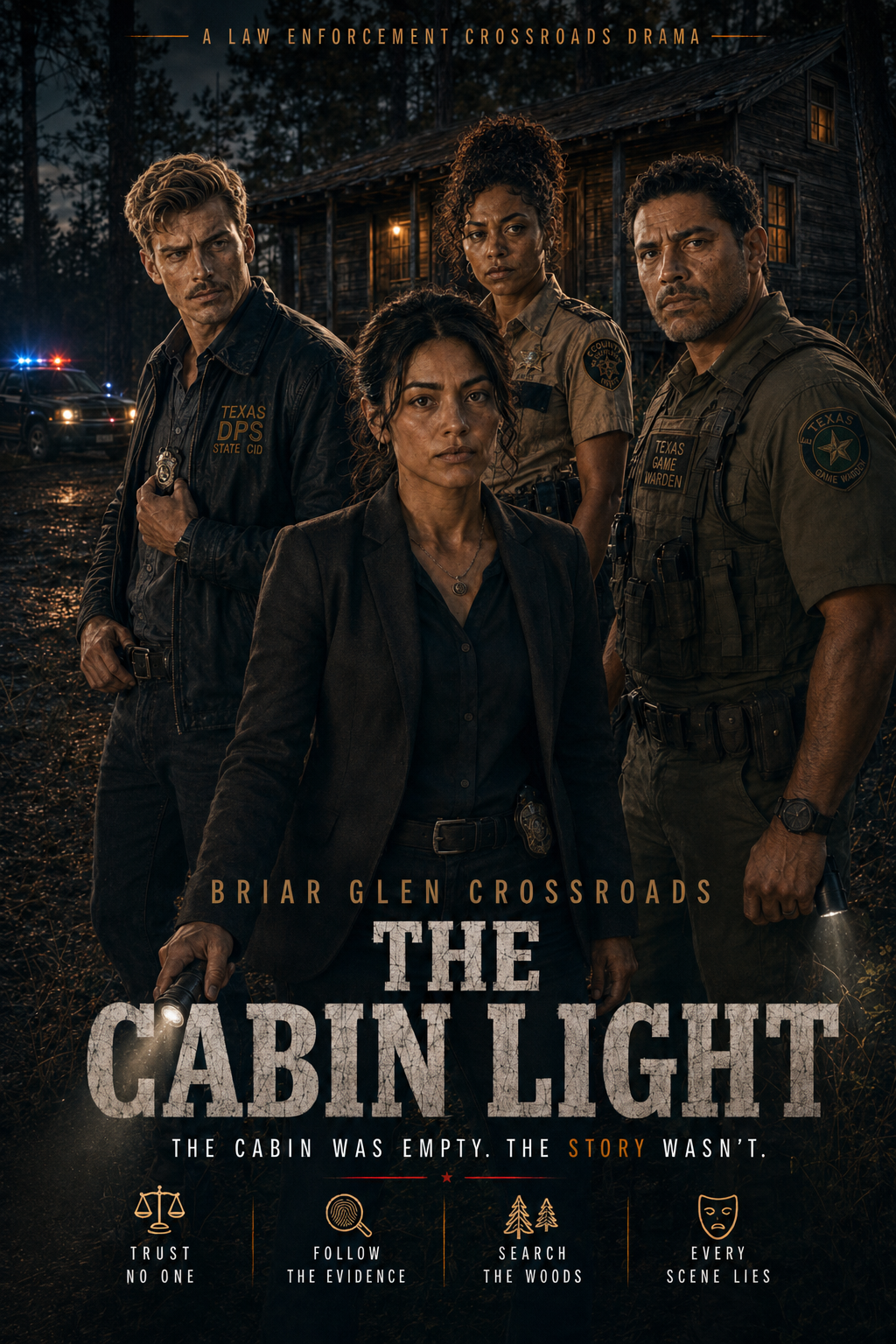
The Cabin Light
The cabin in Cedar Brake Woods was supposed to be empty — until someone saw a light in the window. Briar Glen Crossroads: The Cabin Light is a focused, grounded law-enforcement drama about one abandoned cabin, one fragile scene, and the moment your character steps into a rural investigation before Briar Glen decides which version of the truth is easiest to file away. You create your character, choose the person at the heart of the crisis, and enter a scene where one discovery can expose more than anyone meant to leave behind. You choose your name, age, gender, appearance, and why you are near Cedar Brake Cabin when law enforcement arrives. Then you choose who pulls you into the investigation. 🚓 Megan Hayes is the Briar County deputy trying to keep the first report from becoming the only story. She knows Sheriff Mallory’s office too well to trust a clean explanation. Her path centers on official language, chain of command, cautious trust, and whether one deputy can keep the truth alive without breaking from the office that controls the report. 🕵️ Owen Maddox is the Texas DPS CID investigator standing outside Briar Glen’s social map. He is harder to pressure because he is not local, but easier to mislead because he does not know which names carry weight or which silences mean fear instead of guilt. His path centers on evidence, jurisdiction tension, outside procedure, and whether the cabin is hiding a crime, a person, or a mistake made by people with badges. 🧾 Naomi Battise is the Briar County District Attorney investigator whose last name follows her before she speaks. She is Lena and Eli Battise’s older cousin on their father’s side, close enough to Pine Cut for people to remember, but courthouse enough for others to question where her loyalty sits. Her path centers on admissibility, witness pressure, contaminated evidence, courthouse politics, and whether the scene was arranged to collapse before it ever reaches court. 🌲 Rafael “Rafe” Garza is the Texas Game Warden reading the woods while everyone else argues over the cabin. He knows deer leases, old gates, creek beds, fence cuts, back roads, trail cameras, and the paths people use when they do not want a patrol car to see them. His path centers on rural evidence, land access, quiet movement, and whether the real scene started long before anyone reached the porch. The investigation begins after dark in Cedar Brake Woods. The timber road is narrow, the old lease signs are faded, and the cabin door is unlocked. Inside, the lantern is still warm. A cot has been used recently. Mud cuts across the floorboards. A bloodied towel sits near a basin. A cheap prepaid phone has no useful contacts. Old Briar County reports are folded into a storage box. On the table, a radio scanner still whispers sheriff traffic into the room. There is no body. No clear victim. No clean crime scene. Maybe someone was hiding there. Maybe someone was wounded. Maybe the cabin was staged for law enforcement to find. Maybe the first suspect is only guilty of having the wrong truck, the wrong name, or the wrong reason to be in the woods after dark. One warm lantern can become proof before anyone checks who lit it. One bloodied towel can become guilt before anyone knows whose blood it is. One folded report can become leverage before anyone asks why it was saved. You decide why you are here. Maybe you are the one living in the cabin because you had nowhere safer to go. Maybe you stumbled onto it while crossing timber land, checking a fence, hunting, or following a light you should have ignored. Maybe you came with law enforcement, dispatch, records, the DA’s office, or another county function. Maybe you only passed through at the wrong time, and Briar Glen has already decided that makes you useful to blame. You can stand with Megan before Mallory’s version hardens, follow Owen through the evidence others are stepping around, help Naomi protect a case that may already be damaged, walk the woods with Rafe before the rain takes the tracks, or decide that the safest truth is the one nobody can prove. This is not a raid, a crash, a courtroom drama, or a clean detective story. The drama stays grounded in rural East Texas pressure, law enforcement compromise, fragile evidence, jurisdiction conflict, family names, Pine Cut suspicion, courthouse risk, woods knowledge, radio traffic, old reports, and the danger of writing one simple sentence too soon. Feedback, playtest notes, character wishes, relationship ideas, and scenario suggestions help shape where Briar Glen goes next.