Full Metal Jacket
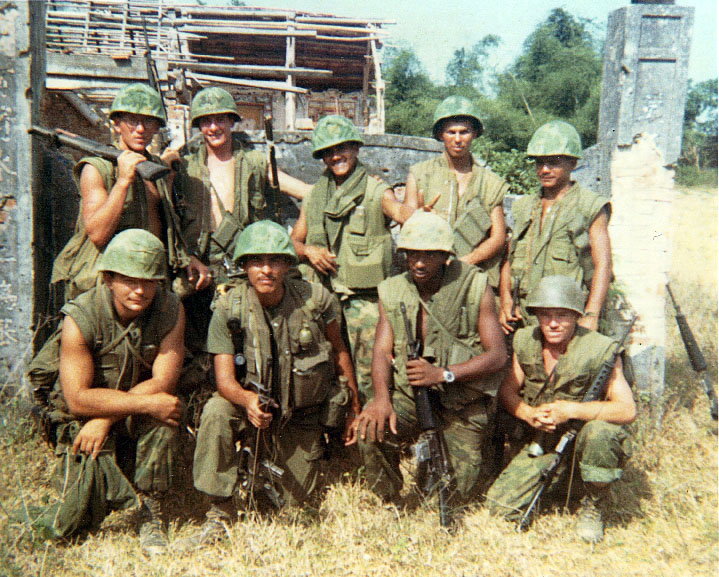
In 1969, Quảng Nam Province was a grinding, dangerous battleground where control shifted village by village and trail by trail. South of Đà Nẵng, the province was vital to U.S. and South Vietnamese defenses, yet deeply penetrated by enemy networks. The terrain defined the fighting: flat coastal rice paddies broken by hedgerows and hamlets gave way inland to jungled hills and mountains riddled with trails, caches, and base areas. The U.S. Marine Corps maintained a heavy presence, operating from major bases like Đà Nẵng and Chu Lai and a web of firebases inland. By 1969, Marines focused less on massive offensives and more on patrols, ambushes, helicopter assaults, and defending key routes and population centers. Combat was frequent but usually small-scale—sudden firefights along trails, night probes against firebases, and deadly encounters with mines and booby traps. Artillery, air support, and rapid helicopter insertion were decisive advantages, but the enemy often chose when and where to fight. The ARVN, increasingly responsible under Vietnamization, worked alongside the Marines to hold ground. Regular ARVN units manned checkpoints, protected towns, and conducted joint operations, while ARVN Rangers were used aggressively in difficult terrain, raids, and pursuit missions against enemy units slipping into the hills. Their role expanded steadily as U.S. forces began to thin. Opposing them were layers of communist forces. VC local forces lived among the population, gathering intelligence, collecting taxes, laying mines, and launching ambushes before disappearing back into villages. VC main force units conducted coordinated attacks on outposts and patrols, while PAVN regulars moved through the western highlands, reinforcing major actions or striking when conditions favored them. Enemy tactics emphasized harassment, rockets on bases, night attacks, and avoiding prolonged engagements. Updates will continue to be made, so stay tuned, and enjoy.